 Building Envelope Solutions
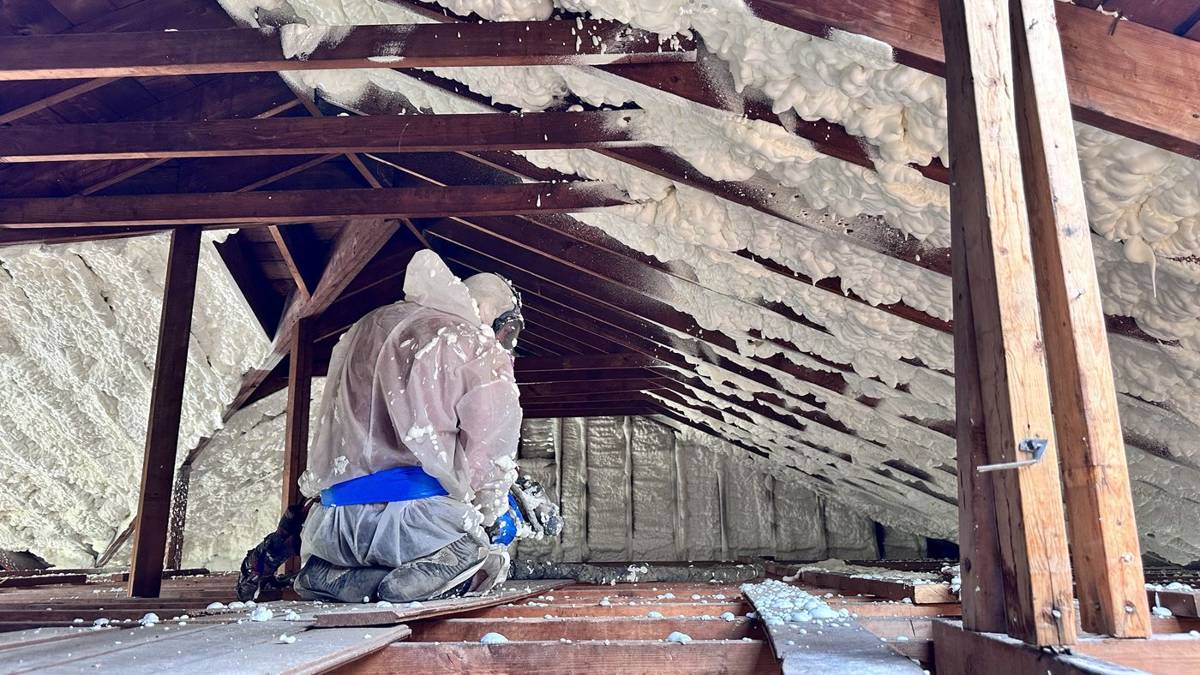
Air sealing comes first
Insulation slows heat, but it doesn’t stop air. Gaps around pipes, wires, chimneys, lights and hatches let warm air escape all winter. Sealing them is the cheapest way to make a house more comfortable, and it lets the insulation work.
In Queens houses, the biggest leaks are usually in the attic floor and around the rim joist in the basement.
Where we seal
- Attic floor: around pipes, wires, light fixtures, the chimney and the hatch.
- Knee walls: in capes and colonials, where side attics meet heated rooms.
- Basement: the rim joist and the gaps where pipes and wires come in.
How we find the leaks
A blower door test depressurizes the house so leaks show up. We test before and after where a program calls for it, so you can see the difference in numbers.
Rebates
Queens is split between utilities. Much of the borough has National Grid gas, parts of northwest Queens have Con Edison gas, and the Rockaways have PSEG Long Island electric. Most one- to four-family homes now go through NYSERDA programs. For 2027, Con Edison and National Grid plan one joint weatherization program for market-rate homes and apartment buildings. We check what is open for your address before we price the job. See the NYC rebate guide.
Common questions
Will sealing make my house stuffy? We seal the leaks you don’t want, such as attic bypasses and rim joists. If a house gets very tight, we tell you whether it needs ventilation.
How long does it take? Most Queens homes take a day, often together with attic insulation.