 Building Envelope Solutions
Why crawl spaces matter
Many homes in Queens, Staten Island and Long Island sit over a crawl space. When it’s vented to the outside or left bare, cold air sits right under your floors, pipes can freeze, and damp air rises into the house. Old fiberglass batts stapled between the floor joists tend to sag, get wet and fall down.
How we insulate a crawl space
- Inspect. We check for water, wood damage, pests and how the space is vented.
- Clear and prepare. Old, wet or fallen insulation comes out.
- Seal the rim joists. The band of wood on top of the foundation is one of the leakiest parts of any house.
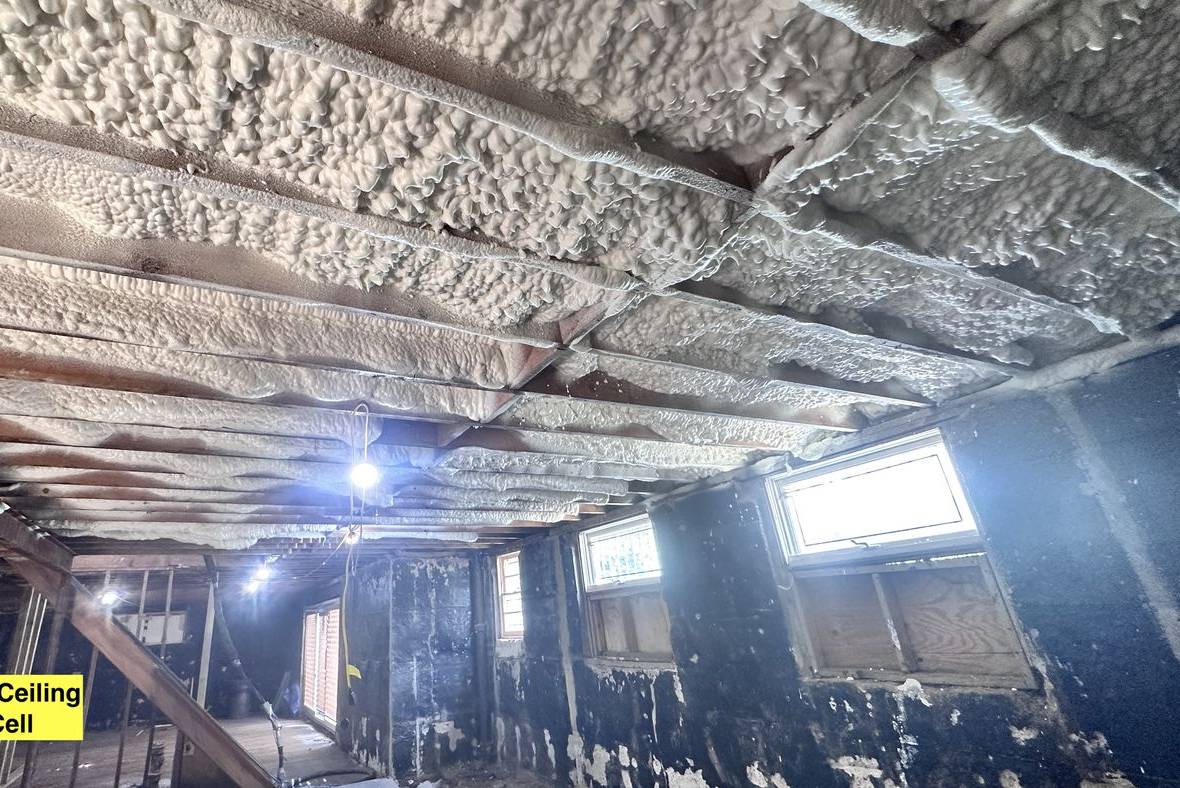
- Insulate the walls. Closed-cell spray foam on the crawl space walls insulates, air seals and stops moisture moving through in one layer.
- Cover the ground. Where it fits the space, a vapor barrier on the floor keeps ground moisture out.
In some homes it makes more sense to insulate the floor above the crawl space instead. We’ll tell you which way suits your house and why.
Basements
The same work fits a full basement. We spray closed-cell foam on the foundation walls and the rim joists, where the floor framing sits on the wall and most of the cold air gets in. Closed-cell foam also stops the dampness that comes through old masonry. If you plan to finish the basement, we foam the walls before the framing and drywall go up.
What you’ll notice
- Warmer floors in winter
- Less musty smell and damp air upstairs
- Pipes that are less likely to freeze
- A heating system that runs less
Rebates
Crawl space and rim joist work is often included in utility and NYSERDA programs when they’re funded. See our NYC insulation rebate guide.
Common questions
Is spray foam the only option? No. Rigid foam board can work on crawl space walls too. Spray foam is usually faster and seals better in tight, uneven spaces.
What if my crawl space floods? We’ll tell you first. Water problems need fixing before insulation goes in.
How long does it take? Most crawl spaces are done in a day. Call (347) 200-5089 for a free estimate.